
Tuesday briefing: Could Burnham take Britain back towards the EU?
🇬🇧 Reino Unido · General · hace 4 h · Fuente: The Guardian World
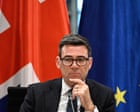
Good morning. After a holiday spent contracting nursery bugs from an 11-month-old, it’s good to return. Yesterday, Andy Burnham marked his first day back after party conference by calling for a closer relationship with the EU and drawing a line under a decade of “drift and division”. On Sunday, he said it was “clear” the Kremlin had been involved with the 2016 Brexit referendum vote.
Both statements mark a break, rhetorically at least, from his predecessors. Conservative governments long insisted there was no evidence of Russian interference in the Brexit vote. Keir Starmer attempted to put the entire issue of Brexit behind him, treating it as a historic event rather than a cause of economic pain.
UK | Andy Burnham said Iran’s Islamic Revolutionary Guards Corps were “almost certainly” behind threats to RAF Fairford , the firmest attribution of responsibility made so far by the UK after an incident late last month.
UK politics | A close adviser to Nigel Farage had an influential role at a national polling company despite not being publicly associated with the firm, the Guardian revealed.
Ukraine | Volodymyr Zelenskyy has vowed to respond to Russia’s continuing attacks on the Ukrainian power grid as European leaders rally around Kyiv amid a feud with Donald Trump over Ukraine’s strikes on oil refineries.
Israel | Benjamin Netanyahu has ordered the country’s attorney general and the head of the Shin Bet security service to reveal the identities of soldiers and officers interviewed in the documentary NAZA and prosecute them for causing “harm to Israel’s diplomatic and security interests”.
US news | RJ Mitte, the young actor best known for playing Walter White Jr in the award-winning TV series Breaking Bad, died on Monday. He was 34.
In the years after it voted to leave the European Union, Britain became something of a laughing stock among EU member states. “It was like a box set TV drama. People in Brussels would be staying up to watch votes in the House of Commons,” Jennifer Rankin, who moved to Brussels to cover the EU for the Guardian in January 2016, tells me. Civil servants in Brussels grew to regard the UK as one might regard a belligerent and ungrateful elderly relative, an impression that reached its apotheosis when the former Northern Ireland secretary Brandon Lewis admitted that the UK’s Brexit arrangements for Northern Ireland would break international law (albeit in a “very specific and limited way”.)
“From 2016 to 2020, the UK was seen as a model of how not to run your country,” Jennifer says. This impression softened after the passing of the Withdrawal Agreement Act in early 2020, and the Windsor framework deal, which amended the arrangements under the Northern Ireland protocol in 2023. “That was a turning point in drawing a line under the bad blood of the Brexit years,” Jennifer says. Keir Starmer’s government then sought to cooperate with the EU on various issues such as security, food and fishing, but the “reset” he pledged to deliver was tightly circumscribed by his red lines: no rejoining the single market, no customs union, no freedom of movement.
After his conference speech, Burnham suggested he might be open to reconsidering this when he suggested, somewhat cryptically, that the UK could go “all the way” (presumably towards full EU membership), and yesterday he called for a “longer-term discussion” about Britain’s relationship with the EU. But what might that actually mean?
Burnham has been “showing a lot of ankle” to remainers over the last few weeks, Peter Walker tells me. During his Labour conference speech, he promised to lay out “different options” for Britain’s long-term relationship with Europe , and acknowledged that Brexit had caused “more harm than good”.
“It’s pretty clear that a decent majority of people would like to push a switch that meant Brexit had never happened,” Peter says. Indeed, a YouGov poll in January 2025 found that just 11% of people thought Brexit had been more of a success than a failure. And as recently as last week, the Messina Group, a polling company, reported that half of voters say they would like to rejoin the EU. The economic consequences of Brexit are now well known, and research has estimated that, a decade after the referendum, UK GDP per head is between 6% and 8% lower than it would have been without Brexit. Yet reversing this decision would require another referendum, which would be politically fraught, reigniting a debate that splintered the country a decade ago, and reducing a highly complex and technical issue to a binary decision.
It’s hard to imagine Burnham – or any politician, for that matter – wanting to fight the next election while pledging something so divisive. Notably, even the Liberal Democrats, the most pro-EU of the major parties, favour rejoining the single market and customs union but describe UK membership of the EU as a “long-term goal” rather than an immediate priority.
If a second referendum seems like a vanishingly distant prospect, other changes could take place without one. In the combustive years after Brexit, there was a short-lived hope that the UK might pursue its own version of the Norway model, allowing it to become a member of the European Economic Area. “It was the Conservatives who decided to pursue the hardest Brexit possible,” Peter reminds me.
In theory, a softer deal could mean rejoining the single market and customs union. But this would mean breaking Labour’s red lines, which Burnham has said he will stick to. And if the UK was to rejoin the single market but remain outside the EU, it would be forced to accept rules that it had no power to shape. “As soon as you look at the democratic deficit that comes with single market membership, the case for rejoining the EU becomes stronger,” Jennifer tells me.
The debate over rejoining the EU is often conducted in relatively parochial terms, as if it only concerns Britain. But the UK’s future relationship with the EU will be largely shaped by the member states of a union that has changed significantly since the referendum. Far-right parties are gaining power in France and Germany, while the mercantilist politics of China and the US have inspired the EU’s Made in Europe agenda, a series of protectionist laws designed to bolster European industry and reduce reliance on Chinese imports.
In this context, Burnham may decide it’s better to be inside the tent than outside it. The Made in Europe agenda is particularly concerning for the government , since UK industry could suffer if exports were legally classified as “non-European” goods under these new laws. But as Mujtaba Rahman wrote in an interesting opinion piece for the Guardian in July, “any serious rejoin debate must start from an honest assessment of what the EU has become”.
Right now, the longer term outcome is anyone’s guess. In his statement to the Commons, Burnham confirmed that the planned UK-EU summit will go ahead in November. Negotiators are expected to discuss a trade deal on food and drink, a deal on emissions trading, a plan to link the energy systems of the EU and UK and the new youth mobility scheme. These areas were all discussed at last years’ UK-EU talks, so Burnham wasn’t announcing anything we didn’t already know.
“There’s a lot of frustration in Brussels that the UK has been talking a big game on a reset with the EU, without actually changing very much,” Jennifer says. “The theme over the last ten years is that the EU has always been waiting for the UK to define what it wants. The rhetoric may be warmer, but the substance has stayed the same.”
Here’s a line I didn’t expect to read today: professor Devi Sridhar, chair of global public health at the University of Edinburgh, is worried about the pneumonic plague (although it might not be for the reasons you suspect). Poppy
Kiran Sidhu was touching, on considering who to pass her most prized possessions down to in her will since she doesn’t have children. Poppy
I, too, have been had by the myth that my (small amount of) muscle will turn into fat if I don’t force myself into a few push-ups every week. Not so, according to this week’s Is it true that … column – although what does happen when you stop exercising isn’t that much more reassuring. Poppy
Cycling | Matt Richardson has been withdrawn from the Great Britain team for next week’s World Cycling Championships in Shanghai amid allegations of misconduct.
Football | Almost half of female footballers are considering leaving the sport because of financial concerns or psychological stress, and 57% have struggled with their mental health, according to a report highlighting the working conditions for players worldwide.
Sport | Manchester United have endured their worst league start in 40 years but coach Michael Carrick insists he does not feel under pressure and has said his captain, Bruno Fernandes, will rediscover his form.
The Guardian leads with “PM: Britain’s relationship with EU ‘not good enough’”. The i has “Burnham ready to sign new EU deal next month – as he attacks Brexit ‘damage’”. The Mail says “Burnham in retreat over Russia Brexit ‘lies’”.
The Times splashes on “Cut screen time in class ‘for sake of pupil health’”. The Financial Times has “Putin breaking ‘ceasefire’ on energy targets, says Zelenskyy”. The Mirror reports on comments from Reform’s Robert Jenrick on migrants, under the headline “Horrifying”.
Trump rewards Putin and betrays Ukraine with Russia diesel deal
Donald Trump’s deal to buy Russian diesel has been met with fury from Volodymyr Zelenskyy, who said it was ‘a weak decision’ and would generate ‘billions’ in extra revenue for Putin’s war effort. The Ukrainian president has also rejected US calls for an ‘energy ceasefire’, which would require Kyiv to stop striking oil refineries, saying Moscow must first end its attacks on energy infrastructure. Lucy Hough speaks to the Guardian’s senior international correspondent, Luke Harding .
A bit of good news to remind you that the world’s not all bad
Fuente: The Guardian World
1 fuentes están cubriendo esta historia
También está pasando
Huracán 'Simon' deja un muerto en Guerrero e inundaciones en Acapulco
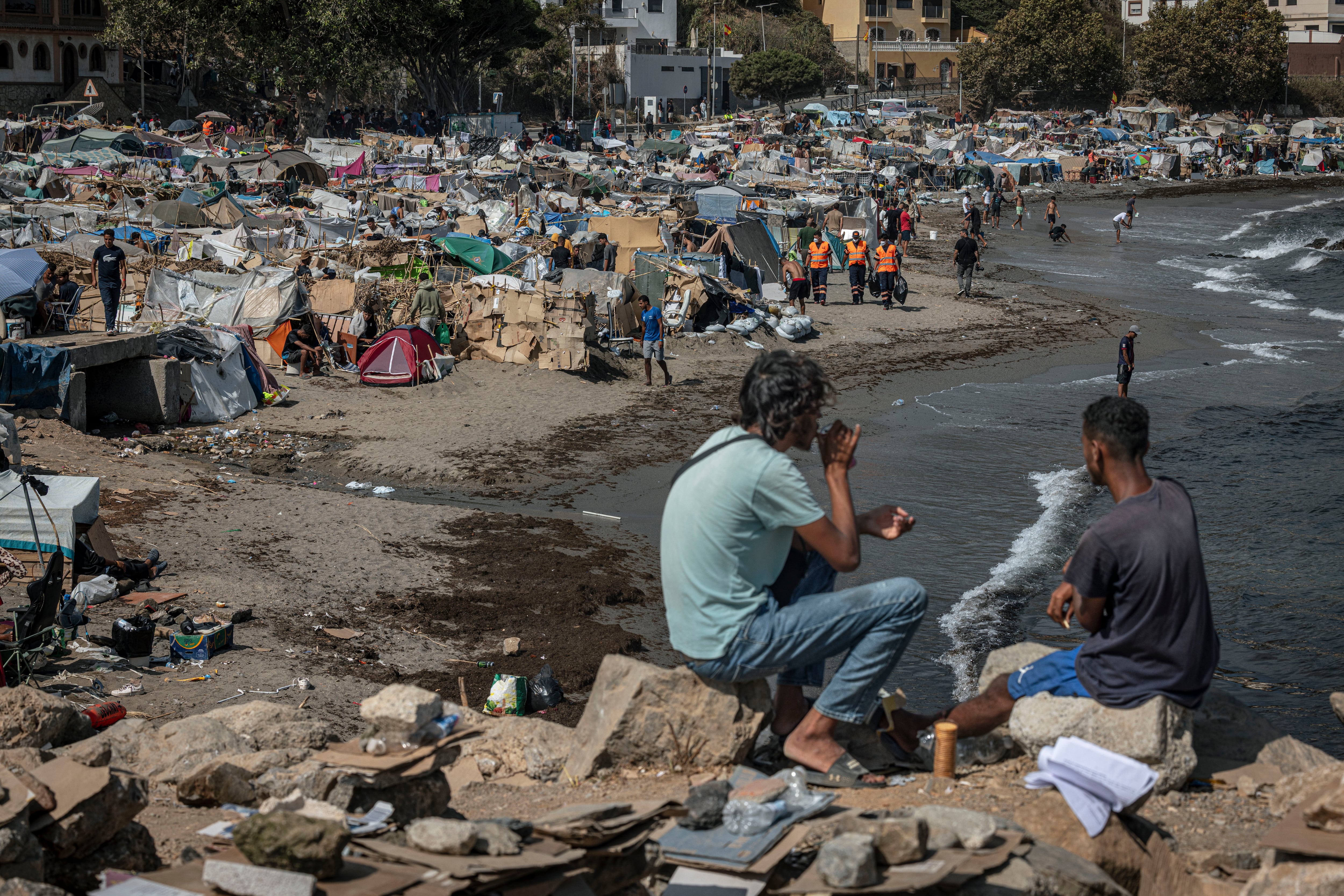
Muere un migrante marroquí tras desplomarse en un asentamiento de la playa del Trampolín en Ceuta
La última visita del Rey a Ceuta fue con Juan Carlos I en 2007 #shorts
EE.UU.: Horror y rechazo ante el plan de transmitir una ejecución
Resumen propio de La Primera en Línea con enlace al medio original. Los derechos del artículo completo y de las imágenes pertenecen a su fuente. Enlace de esta noticia