
Would slashing migration tank the economy or reset Australia’s living standards? Canada may offer clues
🇬🇧 Reino Unido · General · hace 3 h · Fuente: The Guardian World

Annual population growth for the North American nation has slowed to just 0.5% – and the economy is ‘adjusting’
Get our breaking news email , free app or daily news podcast
Would slashing net overseas migration “trash the economy” or deliver the necessary population “reset” to restore Australia’s stagnant living standards?
Labor and an ascendant One Nation have presented starkly different visions of what a migration program in the national interest looks like.
Pauline Hanson, the populist party’s leader, last month announced a plan to cut the number of temporary migrants in Australia by more than 750,000 over three years by targeting international students and family members of skilled migrants.
To achieve that reduction, net overseas migration (Nom) would need to turn negative for three years, the party says, before an ongoing cap of 130,000.
That compares with Labor’s longer-term Nom target of 225,000 , and to the last official estimate of 292,000 in the year to March.
Tony Burke, the home affairs minister, said One Nation’s plan , if enacted, would “trash Australian services and trash the Australian economy ”.
Hanson disagrees, and is quick to blame Australia’s high population growth over the past few years for the economy’s woes.
In a social media post, she said “vested interest [sic] are warning Australia could face a technical recession if migration is cut”.
“Australians have been in a per-capita recession for years. Their lives have been getting worse because of migration. Canada has shown living standards improve when migration is cut.”
For those looking for international comparisons, Canada has long been a type of sister country to Australia – similar size, similar culture, similar economy.
And the North American nation is in the midst of a dramatic migration adjustment that has flattened population growth.
Unlike Hanson, Canada’s policymakers have not targeted a specific net overseas migration level . Instead, they have rolled out a suite of policies to reduce the number of temporary migrants as a share of population from a peak of 7.6% in 2024, to 5%.
Canada is about halfway to this goal. The government has done this by reducing temporary arrivals, particularly international students, making it harder to extend stays, and giving some temporary migrants permanency.
Annual population growth has slowed from 3.1% in early 2024 to just 0.5% now.
So how well has Canada’s economy coped? And what does their experience tell us about how Australia should respond to growing calls for a more hardline approach to migration?
In May, the CD Howe Institute, a leading Canadian thinktank, issued a report on the country’s economy in a “lower immigration era”.
Modelling by the report’s authors, Don Drummond and Parisa Mahboubi, estimated that employment in Canada could fall this year and the next.
Real GDP growth in 2026 may be no more than 0.5%, they forecast, and “little more” than 1% on average in the long term.
Falling employment would normally be cause for alarm, but Drummond and Mahboubi say this is actually “what a normally operating labour market delivers, given the demographic shifts underway”.
“Canada’s economy is not broken. It is adjusting. Understanding that adjustment is a precondition for sound policy in the years ahead.”
Nathan Janzen, the assistant chief economist at the Royal Bank of Canada, agrees with this assessment.
“What the population shifts have done has changed how we need to interpret economic data.”
The university sector has been hit particularly hard by the tighter migration rules. The government also provided exceptions to migrants working in areas of particular labour shortages, such as agriculture and the care economy.
But overall, Janzen says, “the Canadian economy has been relatively resilient”.
“If our population estimate numbers are right, we could have negative employment growth and still have falling unemployment. And the per capita economy looks like it’s getting better.”
But economists warn against assuming Canada’s experience would be replicated here.
Jonathan Kearns, the chief economist at Challenger, says the first point to make is that Canada’s post-pandemic surge was far larger than Australia’s.
“While people here get excited about our post-Covid immigration, it was nothing compared to theirs,” Kearns says.
Fuente: The Guardian World
1 fuentes están cubriendo esta historia
También está pasando

Mujer fallece atropellada en San Juan
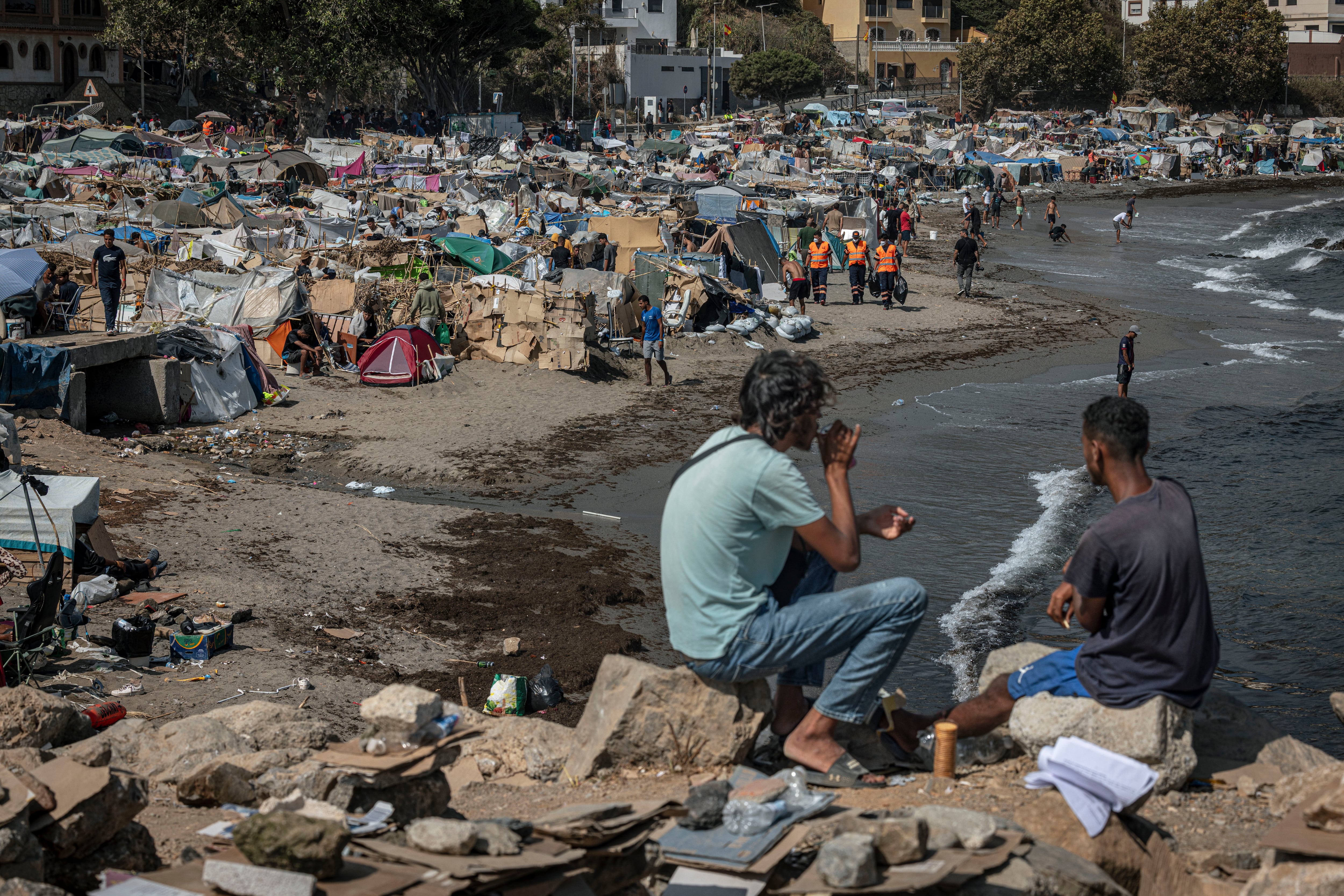
Muere un migrante marroquí tras desplomarse en un asentamiento de la playa del Trampolín en Ceuta

French education minister says up to 500 schools will remain partially or fully closed on Monday after student protests – Europe live


Este domingo una vaguada provoca lluvias
Cornell president calls gang rape allegations 'deeply disturbing'
Resumen propio de La Primera en Línea con enlace al medio original. Los derechos del artículo completo y de las imágenes pertenecen a su fuente. Enlace de esta noticia