
OpenAI announces three big science discoveries and a new way to work with academics
🇺🇸 Estados Unidos · Tecnología · hace 3 h · Fuente: The Verge

AI News Science OpenAI announces three big science discoveries and a new way to work with academics This time OpenAI says it’s taking new advice from scientists on how to release the results.
This time OpenAI says it’s taking new advice from scientists on how to release the results.
Richard Lawler Oct 26, 2026, 11:34 PM UTC Link Share Gift Image: The Verge Part Of All the drama around AI’s takeover of mathematics see all updates Richard Lawler is a senior editor following news across tech, culture, policy, and entertainment. He joined The Verge in 2021 after several years covering news at Engadget. Less than a month after its mass release of hundreds of manuscripts that it said contained solutions to long-standing mathematics questions, OpenAI is back with three more “major” discoveries in math, computer science, and physics . What’s different this time is the choice to have external experts that OpenAI describes as “shepherds” guiding the results in computer science and physics, while for the math problem it says that they advised it to release the AI output for researchers to work through their own explanations.
Local smoothing for the Euclidean wave equation. The proof uses an auxiliary partial differential equation to establish Sogge’s local smoothing for waves in every spatial dimension at least two. It also yields the Kakeya maximal and dimension conjectures and Stein’s spherical restriction estimates throughout the interior of the conjectured range. We are releasing the model output directly, as we did in our October 6 release.
The Exponential Time Hypothesis is False. The paper gives a deterministic algorithm that exactly counts satisfying assignments of fixed-width CNF formulas in subexponential time and polynomial space. The case of 3-SAT refutes the Exponential Time Hypothesis. An independent working group of computer scientists led by Russell Impagliazzo, Ramamohan Paturi, and Ryan Williams will examine and explain the proof. At the group’s request, we are making the materials public immediately so others can examine them as well.
This approach could have its own issues, the company admits, and the AGMAI panel of math advisers OpenAI put together just said yesterday that “we recommend that AI companies do not adopt” the practices of designating certain people to receive the output first, citing unequal access, borrowed reputation, and biased selection as a few of the issues. Instead, they recommended that in the future, AI labs release output on scholarly repositories, with Lean-formalized proofs, info on how the problems were chosen, funding for people working on understanding the results, and other information.
The physics information has not been released in full, but is a “mathematically rigorous existence proof of certain interacting quantum field theories containing gauge fields and fermions in four dimensions, including Quantum Chromodynamics (QCD) and a unified completion of the Standard Model of particle physics.” According to OpenAI, “David Gross will lead a group including Michael Douglas, Arthur Jaffe, Igor Klebanov, and Nikita Nekrasov that will shepherd this work.”
The computer science collaboration is said to prove that the Exponential Time Hypothesis (ETH) , which has been widely believed to be true, is actually false. OpenAI says verification of the result will be guided by a group of three experts that includes UC San Diego’s Russell Impagliazzo and Ramamohan Paturi, who were part of the group that originally proposed it in 1999 , as well as MIT professor Ryan Williams . The group decided to release the AI output write-up and Lean proof on GitHub today .
They also released an open letter to the community asking for input on how to examine the claim, and about setting norms for dealing with AI-generated breakthroughs:
What expectations should govern early access to AI-generated results, disclosure of conflicts of interest, and the use of unpublished material for subsequent research?
How should credit recognize both new discoveries and the work of checking, fixing, simplifying, explaining, and extending them?
How can we support students and researchers as methods and research directions change, while preserving the understanding and judgment needed to question results and develop new ideas?
There’s similar documentation for the math breakthrough, where its model “produced a proof of the local smoothing conjecture in every dimension and therefore also resolve the Kakeya conjecture and Stein’s restriction conjecture in all dimensions.” Just a few months ago, NYU professor Hong Wang was awarded a prestigious Fields Medal by the International Mathematical Union for resolving the Kakeya conjecture in three dimensions.
Richard Lawler AI News OpenAI Science More in: All the drama around AI’s takeover of mathematics OpenAI is giving $5 million to help mathematicians make sense of AI-generated research. Robert Hart Oct 15 ‘Pure insanity’: Mathematicians will need years to make sense of OpenAI’s latest drop Robert Hart Oct 9 OpenAI drops another batch of mathematical breakthroughs Robert Hart Oct 6 Most Popular Most Popular Microsoft offers buyouts to 60,000 employees A YouTuber dissected an iPhone Duo and thinks he found the cause of crackgate Apple updates the iPad Mini with a larger OLED display The Gospel according to Peter (Thiel) r/opensource just banned AI, non-English speakers, and more Advertiser Content From This is the title for the native ad
Fuente: The Verge
1 fuentes están cubriendo esta historia
También está pasando
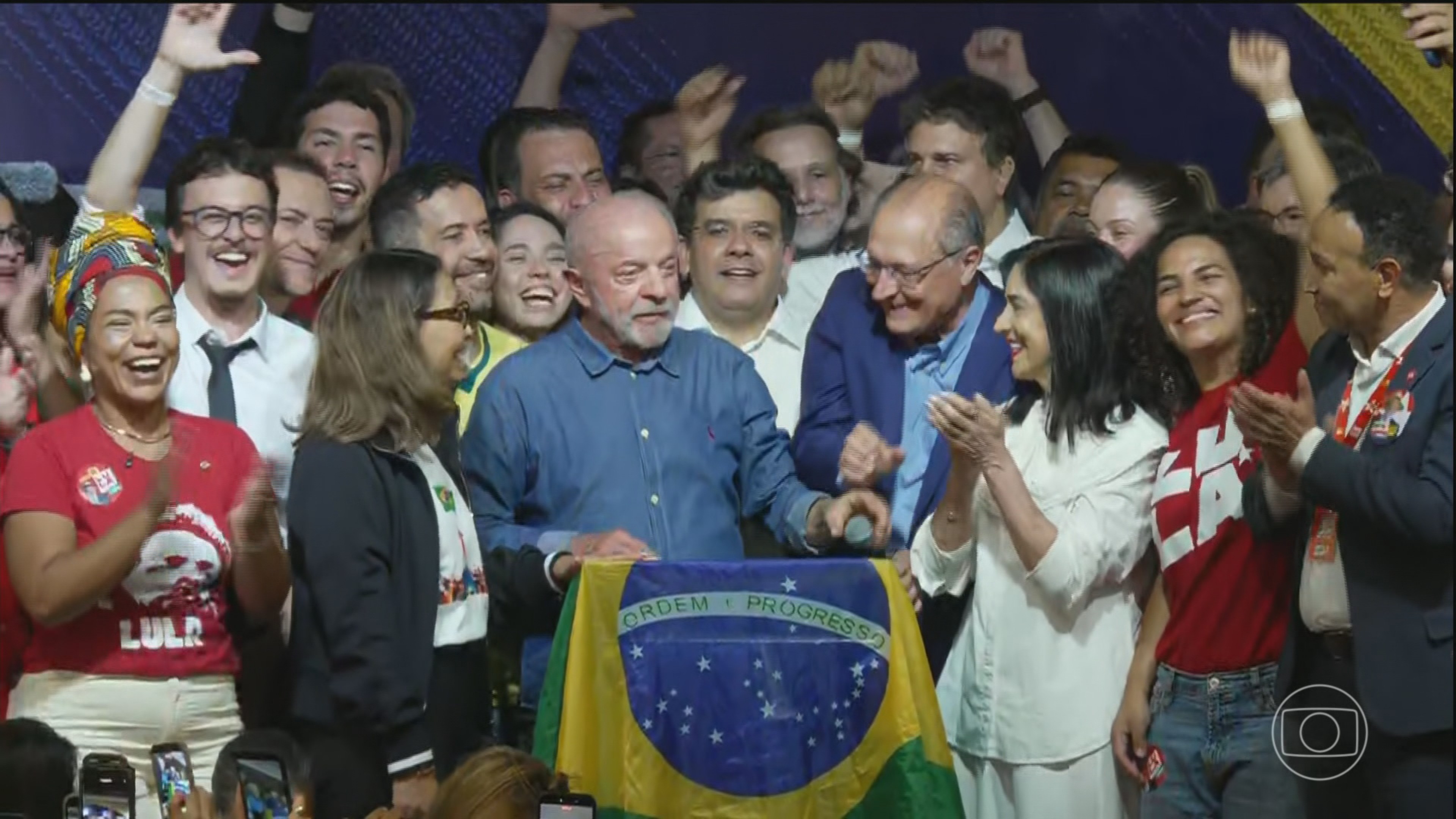
Lula, reeleito, diz que vai mudar a forma de governar e que vai trabalhar com o Congresso
"Es devastador": la guerra comercial entre EE.UU. y Canadá pone a las proteínas en el menú - CNN en Español
Rating del domingo 27 de septiembre en Chile: cómo le fue a CHV, Mega, Canal 13 y TVN - La Tercera
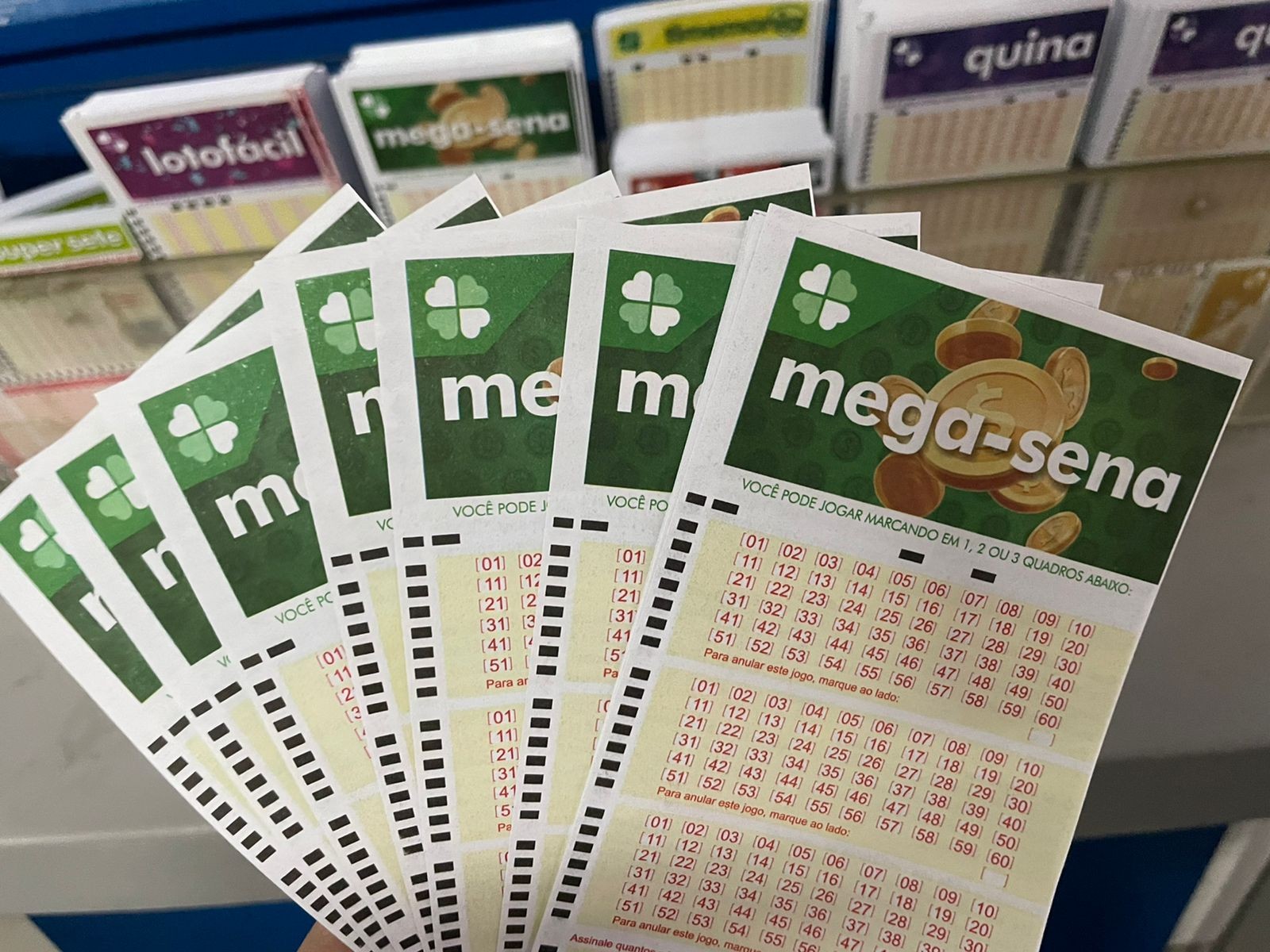
Mega-Sena, concurso 3075: confira os números sorteados
Sismo en el este de República Dominicana provocó evacuaciones y se percibió en múltiples provincias, pero sin heridos ni daños reportados - Infobae
Resumen propio de La Primera en Línea con enlace al medio original. Los derechos del artículo completo y de las imágenes pertenecen a su fuente. Enlace de esta noticia